Paint Raw Material Testing Lab in India
Every coating’s performance is decided before it ever reaches a mixing tank, in the pigments, resins, solvents, additives, extenders, and binders that go into it. SGM National Laboratory is a paint raw material testing lab that tests these raw materials so paint manufacturers can catch an off-spec resin batch or an under-dispersed pigment before it affects colour, adhesion, drying time, or durability across an entire production run. We work with decorative, industrial, automotive, marine, powder-coating, and protective-coating manufacturers from our facility in Udaipur, Rajasthan.
Ensuring Paint Quality with a Paint Raw Material Testing Lab in India
The performance of any paint depends largely on the quality and consistency of its raw materials. Variations in chemical composition, purity, or physical characteristics can directly impact colour accuracy, adhesion, durability, gloss, and overall coating performance. This is why manufacturers trust a professional paint raw material testing lab in India to verify the quality of every ingredient before production.At SGM National Laboratory, we provide comprehensive testing using advanced analytical instruments, calibrated equipment, and industry-approved methodologies. As a trusted paint raw material testing lab, we evaluate pigments, resins, fillers, additives, solvents, and other paint raw materials to ensure they meet the required quality standards. Whether you call it a paint testing laboratory or a paint analysis laboratory, what matters is accurate data you can act on.
What We Test in Paint Raw Materials
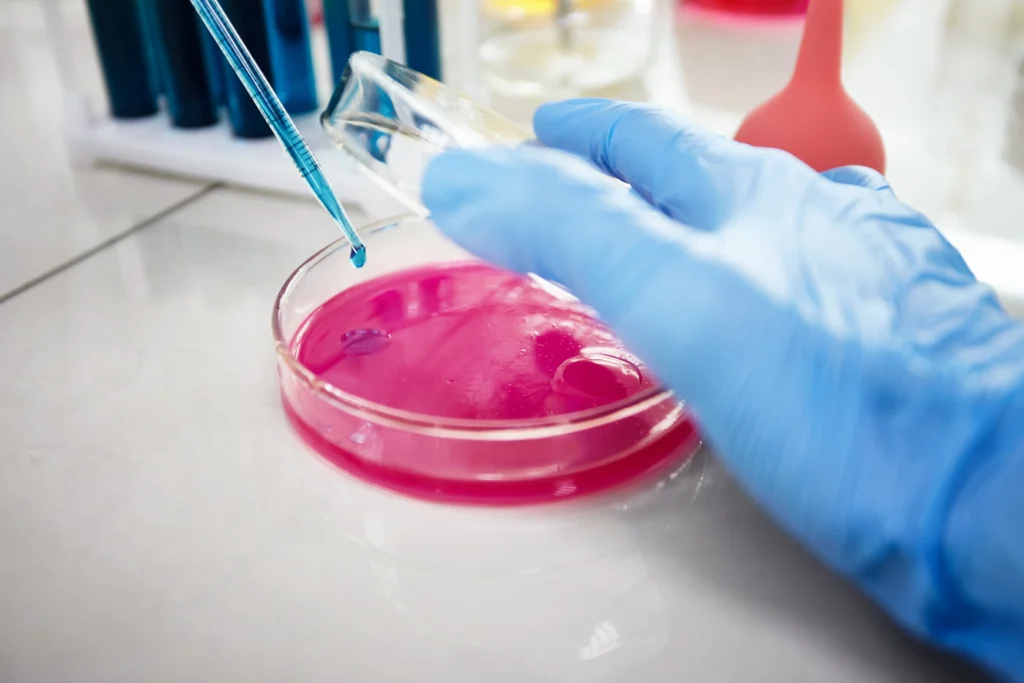
The quality of every paint begins with the quality of its raw materials. At SGM National Laboratory, our paint raw material testing lab in India provides comprehensive testing services to evaluate the physical, chemical, mechanical, and performance properties of materials used in paint manufacturing. Our accurate paint testing helps manufacturers maintain product consistency, improve coating performance, and meet industry quality standards.
Pigments
At our paint testing lab, we evaluate pigments for colour strength, purity, particle size, dispersion, tinting strength, opacity, specific gravity, and chemical resistance. Testing helps ensure uniform colour development, consistent coverage, and reliable performance across production batches.

Binders
Our paint analysis lab tests binders for viscosity, molecular properties, solids content, drying behaviour, adhesion, flexibility, compatibility, and film formation. Analysis helps manufacturers evaluate bonding performance, coating strength, durability, and consistent application characteristics.

Additives
Paint lab testing of additives covers flow modifiers, dispersants, stabilisers, anti-foaming agents, anti-settling compounds, and wetting agents. Analysis evaluates activity, stability, compatibility, and performance to support smooth application, proper dispersion, and consistent coating quality.
Solvents
Solvent testing in our paint testing laboratory evaluates purity, density, flash point, evaporation rate, boiling point, moisture, volatility, and formulation compatibility. These properties influence coating drying time, application behaviour, stability, and handling during production.
Fillers & Extenders
At our paint raw material testing lab, we evaluate fillers and extenders for particle size, moisture, chemical composition, brightness, bulk density, oil absorption, and mineral purity. Testing helps assess their effect on coating coverage, cost efficiency, consistency, and physical stability.

Resins
Our resin testing laboratory covers chemical composition, viscosity, solids content, curing behaviour, flexibility, adhesion, and compatibility. These properties help assess resin quality and its influence on film formation, durability, gloss, and overall coating performance.

Driers (Drying Agents)
Driers are tested at our paint analysis laboratory for metal content, activity, dosage efficiency, stability, compatibility, and drying performance. Analysis helps coating manufacturers select and control drying agents for uniform curing, efficient film formation, and consistent finished-product performance.

Anti-Corrosive Materials
Paint testing of anti-corrosive pigments and additives covers composition, protective performance, moisture resistance, salt spray behaviour, and stability. Testing helps evaluate their effectiveness in providing durable corrosion protection for industrial and protective coating systems.
Plasticizers
Our paint testing lab evaluates plasticizers for purity, density, viscosity, moisture, compatibility, and thermal stability. Testing helps assess their effect on coating flexibility, film performance, durability, and formulation stability while supporting consistent quality across production batches.
Advanced Paint Raw Material Testing Lab in India
At SGM National Laboratory, raw material testing is the step that decides whether a paint formulation performs consistently once it leaves the lab. Our paint raw material testing lab evaluates pigments, binders, resins, additives, solvents, and fillers using instruments suited to each material, so manufacturers can catch a problem before it reaches a mixing tank rather than after a production run is already underway. Our resin testing laboratory team also handles binders and resin-based raw materials.
Material-Specific Testing
Our paint analysis lab does not run one generic panel on every sample. Pigments, resins, binders, additives, and solvents each get testing scoped to the properties that actually affect how they perform in a finished coating.
Instrument-Based Analysis
Composition, purity, viscosity, and particle size are measured using calibrated analytical instruments and documented procedures, so every result from our paint lab testing can be traced back to exactly how it was obtained.
Formulation-Focused
Reports from our paint testing laboratory are written to support a decision, whether that’s approving a supplier batch, adjusting a formulation, or investigating a production issue, not just listing numbers against a spec sheet.
Coverage Across Coating Types
Decorative, industrial, automotive, marine, powder, and protective coatings each have different raw material requirements, and the scope of our paint raw material testing lab reflects that rather than treating every coating type the same.
Supplier and Batch Verification
Paint testing supports comparing suppliers, confirming incoming batches match agreed specifications, and investigating a raw material when a finished paint starts behaving inconsistently.
Support for Product Development
Beyond routine quality control, data from our resin testing laboratory and pigment tests help R&D teams compare formulation options and troubleshoot performance issues during development, not just after a product has launched.
Paint Raw Material Testing Lab Parameters
Paint raw material testing involves more than checking basic specifications. At SGM National Laboratory, our paint raw material testing lab in India performs comprehensive analysis to evaluate the quality, purity, consistency, and performance of raw materials used in paint manufacturing. Our advanced testing services support quality control, formulation development, supplier qualification, regulatory compliance, and product performance across decorative, industrial, automotive, marine, and protective coatings. We evaluate key raw material properties, including:
| Parameter | Why It Matters |
|---|---|
| Chemical Composition | Confirms raw material identity and consistency across formulations. |
| Purity Analysis | Detects impurities that can affect stability, durability, or colour consistency. |
| Viscosity Testing | Confirms flow characteristics for correct processing and application. |
| Particle Size Analysis | Affects dispersion, colour strength, and surface finish. |
| Moisture Content | Influences storage stability and processing efficiency. |
| Density & Specific Gravity | Supports accurate formulation and batch control. |
| Compatibility Testing | Confirms raw materials interact correctly without affecting stability or shelf life. |
| Performance Evaluation | Assesses properties influencing adhesion, durability, drying behaviour, and gloss. |
Industries We Serve Across India

Decorative Paints
Paint testing for decorative paints evaluates colour consistency, opacity, gloss, adhesion, drying behaviour, and durability. Analysis helps manufacturers maintain consistent appearance and performance across interior and exterior paint applications.

Industrial Coatings
Our paint testing lab evaluates industrial coatings for chemical composition, adhesion, corrosion resistance, hardness, and mechanical performance. Analysis helps verify coating quality and durability for machinery, equipment, structures, and demanding industrial environments.

Automotive Coatings
Our paint analysis laboratory tests pigments, binders, resins, additives, and solvents used in automotive coatings. Analysis helps evaluate colour consistency, finish quality, adhesion, durability, and resistance to environmental conditions for reliable vehicle coating performance and overall appearance.

Marine Coatings
Marine coatings are evaluated at our paint testing laboratory for resistance to saltwater, moisture, corrosion, and harsh environmental exposure. Testing helps assess coating durability and protective performance on vessels, marine equipment, and structures exposed to demanding conditions.

Powder Coatings
Paint lab testing of powder coatings covers particle size distribution, flow characteristics, curing behaviour, adhesion, and finish quality. Analysis helps manufacturers achieve smooth, uniform, durable coatings with consistent application and curing performance.

Construction Chemicals
Our paint raw material testing lab also tests raw materials and formulations used in waterproofing compounds, sealants, repair materials, and other construction chemicals. Analysis helps evaluate composition, consistency, performance, and suitability for reliable construction applications.

Wood Coatings
Our paint analysis lab tests wood coatings for adhesion, gloss, surface finish, scratch resistance, drying behaviour, and durability. Analysis helps manufacturers develop coatings that provide a smooth appearance and lasting protection for different wood surfaces.

Metal Surface Coatings
Our paint testing lab tests metal coatings for corrosion protection, adhesion, hardness, chemical resistance, and durability. Analysis helps verify coating performance and supports reliable protection of fabricated metal products, machinery, structures, and engineering components.

Protective Coatings
Paint testing for protective coatings covers corrosion resistance, adhesion, chemical stability, hardness, and overall durability. Analysis helps evaluate coating performance in demanding industrial environments and supports long-term protection of critical surfaces and components.
Why Manufacturers Choose SGM National Laboratory
- Material-specific testing at our resin testing laboratory and across pigments, binders, additives, solvents, fillers, driers, and anti-corrosive materials, each with parameters chosen for what actually affects performance.
- Reports built for formulation and quality decisions. Results from our paint testing laboratory are clear enough to guide supplier approval, batch release, or R&D directly.
- Coverage across coating types: decorative, industrial, automotive, marine, powder, and protective coatings.
- Testing at our paint raw material testing lab for both domestic and imported raw materials, supporting supplier comparison and specification verification either way.
- Based in Udaipur, Rajasthan, working with manufacturers across India.

Frequently Asked Questions
A representative sample is important for reliable test results. We can guide you on the required sample quantity, suitable container, labeling, and handling based on whether the material is a liquid, powder, paste, or other formulation.
The core testing parameters may remain similar, but the testing scope can vary. New suppliers may require broader initial evaluation, while repeat suppliers may need selected quality checks based on your specifications and requirements.
VOC testing depends on the specific material, parameter, analytical method, and applicable requirement. Share your product specification or regulatory requirement with us, and our team can confirm the relevant testing scope and available methods.
Colour variation can result from differences in pigment purity, particle size, dispersion quality, tinting strength, or chemical composition. Testing these properties in raw pigment samples helps identify potential causes of inconsistent colour development.
Yes. Relevant raw materials for both solvent-based and water-based paint systems can be evaluated. The testing parameters depend on the material type, formulation, application, and quality requirements of the final coating system.
Yes. Flash point testing can be performed for suitable paint solvent samples. Depending on your requirements, testing may also include properties such as purity, density, boiling point, evaporation behaviour, moisture, and formulation compatibility.
The test report identifies the measured results and shows where they differ from the specified requirements. This information can help your quality team evaluate the batch and decide on suitable actions such as rejection, retesting, or supplier review.
Yes. Testing relevant raw materials can help investigate recurring issues such as poor adhesion, inconsistent drying, colour variation, or surface defects. Comparing test results with specifications can help identify potential raw material-related causes.
Retesting is recommended when a supplier changes a raw material formulation, as even small changes can affect important properties. Analysis helps confirm whether the updated material continues to meet your required specifications and performance criteria.
Particle size distribution can influence pigment dispersion, colour development, opacity, and coating uniformity. A controlled and consistent particle size can support better dispersion, while significant variation may contribute to uneven colour or reduced coating performance.
Yes. Samples from different resin suppliers can be tested using the same selected parameters and methods. Side-by-side results provide an objective comparison of properties such as viscosity, solids content, compatibility, and other relevant characteristics.
Yes, where applicable, anti-corrosive pigments and additives can be evaluated for relevant performance properties. Testing may include salt spray performance, moisture resistance, chemical characteristics, and stability based on your coating specification and requirements.
A typical report includes sample identification, tested parameters, analytical methods where applicable, results with relevant units, and other necessary testing information. The report provides documented data for quality control, supplier evaluation, and technical records.
Yes. You can provide your customer specification, required parameters, and acceptance limits. Testing can then be planned around the relevant requirements rather than relying only on a generic testing panel, helping support specific quality and compliance needs.
Yes. Excess moisture in fillers and extenders can influence storage stability, dispersion, processing, and formulation performance. Moisture testing helps identify variations in raw material condition and supports consistent quality during paint production and storage.
The appropriate testing depends on your coating type, raw materials, formulation, application, and quality objectives. Share these details with our team, and we can help identify relevant materials and parameters for your testing requirements.
Frequently Asked Questions
A paint raw material testing lab checks the pigments, resins, binders, additives, solvents and fillers used in paint before they go into production. The results show whether each material meets your specification and will perform as expected in the finished coating.
In practice, no. Both terms describe a lab that measures the properties of paint materials. At SGM National Laboratory, our paint testing laboratory and paint analysis laboratory work is the same: accurate data on your raw materials.
A representative sample is important for reliable test results. Our paint raw material testing lab can guide you on the required sample quantity, suitable container, labeling, and handling based on whether the material is a liquid, powder, paste, or other formulation.
The core testing parameters may remain similar, but the testing scope can vary. New suppliers may require broader initial evaluation, while repeat suppliers may need selected quality checks based on your specifications and requirements.
VOC testing depends on the specific material, parameter, analytical method, and applicable requirement. Share your product specification or regulatory requirement with us, and our paint analysis laboratory team can confirm the relevant testing scope and available methods.
Colour variation can result from differences in pigment purity, particle size, dispersion quality, tinting strength, or chemical composition. Paint testing of raw pigment samples helps identify potential causes of inconsistent colour development.
Yes. Raw materials for both solvent-based and water-based paint systems can be evaluated at our paint raw material testing lab. The testing parameters depend on the material type, formulation, application, and quality requirements of the final coating system.
Yes. You can provide your customer specification, required parameters, and acceptance limits. Paint testing can then be planned around those requirements rather than relying only on a generic testing panel.
Yes. Flash point testing at our paint testing laboratory can be performed for suitable paint solvent samples. Depending on your requirements, testing may also include properties such as purity, density, boiling point, evaporation behaviour, moisture, and formulation compatibility.
The report from our paint raw material testing lab identifies the measured results and shows where they differ from the specified requirements. This helps your quality team decide on suitable actions such as rejection, retesting, or supplier review.
Yes. Our paint analysis lab can test relevant raw materials to investigate recurring issues such as poor adhesion, inconsistent drying, colour variation, or surface defects. Comparing test results with specifications can help identify potential raw material-related causes.
Retesting is recommended when a supplier changes a raw material formulation, as even small changes can affect important properties. Paint lab testing after a change confirms whether the updated material continues to meet your required specifications and performance criteria.
Particle size distribution can influence pigment dispersion, colour development, opacity, and coating uniformity. A controlled and consistent particle size can support better dispersion, while significant variation may contribute to uneven colour or reduced coating performance.
Yes. Our resin testing laboratory can test samples from different resin suppliers using the same selected parameters and methods. Side-by-side results provide an objective comparison of properties such as viscosity, solids content, compatibility, and other relevant characteristics.
Yes. At our paint raw material testing lab, anti-corrosive pigments and additives can be evaluated where applicable. Testing may include salt spray performance, moisture resistance, chemical characteristics, and stability based on your coating specification.
A typical report from our paint raw material testing lab includes sample identification, tested parameters, analytical methods where applicable, results with relevant units, and other necessary testing information. It provides documented data for quality control, supplier evaluation, and technical records.