

SGM National Laboratory

SGM National Lab

Soil Testing Laboratory in India

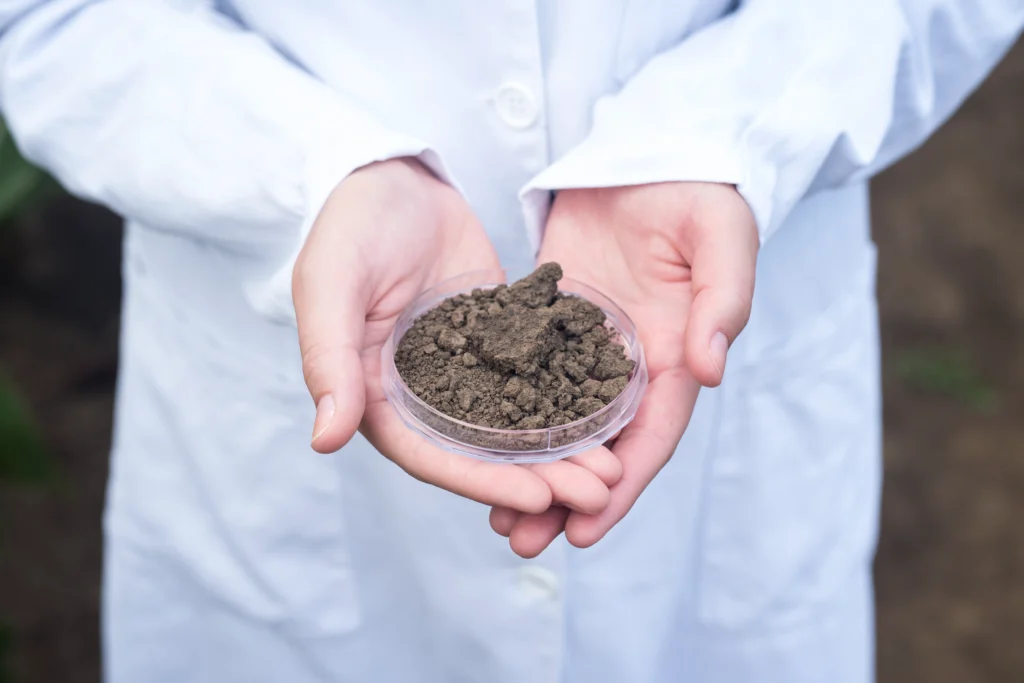
SGM National Laboratory provides reliable and comprehensive Soil Testing Services in India for agriculture, construction, environmental assessment, mining, industrial projects, and research applications. Our Soil Testing Laboratory in India provides accurate soil analysis to evaluate important physical and chemical properties and help clients make informed decisions about soil quality and suitability.

Our Soil Testing Lab in India supports testing requirements for agricultural soil, construction soil, industrial sites, environmental samples, and research materials. Depending on the application, soil samples can be analyzed for pH, moisture content, electrical conductivity, organic matter, nutrients, particle size distribution, soil texture, chemical composition, selected heavy metals, and other required parameters.

Soil Testing Laboratory in India

Soil properties can directly influence agricultural productivity, construction performance, environmental conditions, and land-use decisions. Laboratory-based soil analysis provides measurable information about the physical and chemical characteristics of soil that may not be determined through visual inspection alone.

At SGM National Laboratory, our Soil Testing Laboratory in India provides reliable Soil Testing Services in India for farmers, agricultural organizations, construction companies, industries, mining companies, consultants, researchers, and other organizations requiring accurate soil analysis. Our testing scope can be customized according to sample characteristics, project objectives, and selected testing parameters.

soil testing?

Soil Testing Services in India

SGM National Laboratory provides reliable Soil Testing Services in India for agriculture, construction, mining, environmental, industrial, land development, and research applications. Our Soil Testing Laboratory in India uses appropriate soil analysis methods to evaluate physical, chemical, elemental, and other specified properties. We provide clear and detailed test reports to help farmers, industries, consultants, researchers, and organizations understand soil characteristics and make informed decisions for soil management, site assessment, environmental evaluation, and project planning. Our testing scope can be customized according to sample characteristics and specific project requirements.

Soil Fertility Testing

Soil Fertility Testing

SGM National Laboratory provides customized soil testing services in India to evaluate physical, chemical, and other selected soil properties. Testing parameters can be tailored to agricultural, environmental, construction, industrial, mining, and research requirements.

Soil pH Testing

Soil fertility testing evaluates key properties related to nutrient availability and soil condition. Testing may include pH, electrical conductivity, organic matter, nitrogen, phosphorus, potassium, and other selected nutrients.

Soil Nutrient Testing

Soil Nutrient Testing

Soil nutrient testing measures selected nutrients such as nitrogen, phosphorus, potassium, calcium, magnesium, and sulphur. The testing scope can be customized according to soil type, crop requirements, application, and project objectives.

Soil Moisture Testing

Soil Moisture Testing

Soil moisture testing determines the water content present in a soil sample using the selected laboratory method. The results can support agricultural assessment, construction applications, environmental studies, and soil-related research.

Construction Industry

Soil Texture Analysis

Soil texture analysis evaluates the distribution of particle-size fractions such as sand, silt, and clay. The results help characterize soil behaviour and can support agricultural management, construction, environmental assessment, and research.

Particle Size Analysis of Soil

Particle Size Analysis of Soil

Particle size analysis determines the distribution of soil particles across specified size ranges. It provides information about soil physical characteristics and can support soil classification, construction, agriculture, environmental studies, and research.

Soil Contamination Testing

Soil Contamination Testing

Soil contamination testing identifies selected potentially harmful elements or chemical contaminants in soil. Testing may include heavy metals and other specified substances for environmental investigations, industrial sites, mining areas, and land assessment.

Heavy Metal Testing in Soil

Heavy metal testing in soil determines the concentration of specified elements such as lead, arsenic, cadmium, chromium, mercury, nickel, copper, and zinc. The testing scope is selected according to site conditions and project requirements.

Soil Composition Analysis

Soil Composition Analysis

Soil composition analysis evaluates selected physical and chemical characteristics of soil. Depending on the objective, testing may include elemental composition, moisture, pH, particle size, organic matter, nutrients, and other relevant parameters.

Soil Testing Methods Used for Soil Analysis

The appropriate soil testing method depends on the parameter, sample characteristics, intended application, and testing requirements. SGM National Laboratory provides reliable Soil Testing Services in India and operates as a trusted Soil Testing Lab in India, using suitable laboratory procedures to evaluate selected physical, chemical, and elemental properties for agricultural, environmental, construction, industrial, mining, and research applications.

pH Analysis

pH analysis determines the acidity or alkalinity of a soil sample using the selected laboratory procedure. Soil pH information can support agricultural soil assessment, nutrient management, environmental studies, research, and general soil characterization where chemical conditions need to be evaluated.

Moisture Analysis

Moisture analysis determines the amount of water present in a soil sample using an appropriate laboratory method. Soil moisture information can support agricultural assessment, construction applications, environmental investigations, material characterization, and research where water content is an important property.

Particle Size Analysis

Particle size analysis determines the distribution of soil particles across specified size ranges. The results can help characterize sand, silt, clay, and other fractions and support soil classification, agricultural assessment, construction applications, environmental studies, and research projects.

Chemical Analysis

Chemical analysis evaluates selected chemical properties and constituents present in soil. Depending on the testing requirement, analysis may include nutrients, salts, organic matter, major elements, trace elements, or other specified parameters for agricultural, environmental, industrial, mining, and research applications.

Elemental Analysis

Elemental analysis determines selected elements present in a soil sample using an appropriate laboratory technique. Depending on the requirement, testing may support nutrient assessment, material characterization, environmental investigations, industrial applications, mining studies, and research involving soil.

Contamination Analysis

Contamination analysis evaluates specified potentially harmful elements or chemical contaminants in soil. Depending on the project requirement, testing may include selected heavy metals and other contaminants to support environmental investigations, industrial site assessment, mining areas, land evaluation, and research.

Soil Testing Parameters in India

Soil characterization involves more than simply measuring individual soil properties. At SGM National Laboratory, our Soil Testing Laboratory in India provides comprehensive analysis to help clients understand the physical, chemical, and elemental characteristics of their soil samples. Our Soil Testing Services in India support agriculture, construction, mining, environmental assessment, land development, industrial applications, and research. We evaluate key soil characteristics, including:

Parameter Importance
Soil pH Determines acidity or alkalinity
Moisture Content Measures water present in soil
Electrical Conductivity Indicates soluble ionic content
Organic Matter Helps characterize organic components
Nitrogen Supports nutrient characterization
Phosphorus Supports nutrient characterization
Potassium Supports nutrient characterization
Calcium Provides chemical and nutrient information
Magnesium Provides chemical and nutrient information
Sulphur Supports nutrient characterization
Particle Size Distribution Determines distribution of soil particles
Soil Texture Helps characterize sand, silt and clay fractions
Bulk Density Provides physical soil information
Heavy Metals Determines selected potentially harmful elements
Chemical Composition Identifies specified chemical constituents

Soil Testing for Different Industries in India

agronomy

Agricultural Consultants

Agricultural consultants and soil experts use laboratory soil testing to obtain information about selected physical, chemical, and nutrient-related properties. Test results can support soil assessment, crop-related studies, agricultural recommendations, and technical evaluation based on specific project requirements.

Construction Industry

Construction & Infrastructure

Construction companies, contractors, and infrastructure developers use soil testing to evaluate physical properties relevant to building and engineering projects. Testing may include moisture, particle size, density, compaction-related properties, and other parameters required for project-specific soil characterization.

Environmental Consultants

Environmental consultants use soil testing to evaluate selected contaminants, heavy metals, chemical constituents, and other soil properties. Laboratory results can support environmental site assessments, contamination investigations, monitoring programs, land evaluation, and research related to soil conditions.

Agriculture

Agriculture

Farmers, agricultural companies, and farming organizations use soil testing to evaluate pH, nutrients, moisture, electrical conductivity, organic matter, and other properties. Testing results provide useful soil information for crop planning, soil management, and agricultural decision-making.

Industrial Facilities

Industrial facilities may use soil testing for site assessment, environmental investigations, monitoring, and research. Testing can be customized to evaluate selected physical, chemical, and elemental properties based on the site's characteristics, industrial activities, and specific project requirements.

Research Institutions

Research Institutions

Universities, research institutions, and technical organizations use customized soil testing for academic studies, experiments, and research projects. Testing parameters and methods can be selected according to research objectives, sample characteristics, study requirements, and the type of soil information required.

land development

Land Developers

Land developers may require soil testing before planning, purchasing, or developing a site. Laboratory analysis provides information about selected physical and chemical properties, helping characterize existing soil conditions for land evaluation, development planning, and project-specific assessment.

Mining & Minerals

Mining & Minerals

Mining companies and mineral processing organizations may require soil testing to characterize soil around mining sites and processing areas. Testing can evaluate selected physical, chemical, elemental, and environmental properties according to the specific objectives and requirements of the project.

Environmental Consultants

Environmental consultants use soil testing to evaluate selected contaminants, heavy metals, chemical constituents, and other soil properties. Laboratory results can support environmental site assessments, contamination investigations, monitoring programs, land evaluation, and research related to soil conditions.

Why Choose SGM National Laboratory for Soil Testing?

SGM National Laboratory provides customized soil testing services in India for agricultural, construction, mining, environmental, industrial, and research applications. Our testing scope can be selected according to sample characteristics, project objectives, and required parameters. We focus on appropriate laboratory methods, clear reporting, and reliable analytical information to help clients better understand the physical, chemical, and elemental properties of their soil samples.

Our testing services can be tailored to specific project requirements and selected soil parameters. We support clients with systematic sample evaluation and appropriate testing procedures. Our laboratory approach helps provide useful data for informed technical and soil management decisions.

Why Choose SGM National Laboratory ?

Frequently Asked Questions

Soil testing is the laboratory analysis of soil to determine selected physical and chemical properties. Depending on the purpose, testing can include soil pH, moisture, nutrients, electrical conductivity, particle size, chemical composition, organic matter, heavy metals, and other specified parameters.

Soil testing provides measurable information about soil characteristics that cannot always be determined through visual inspection. The results can support agricultural management, construction planning, environmental assessment, land evaluation, industrial projects, and research

Common soil testing parameters include pH, moisture content, electrical conductivity, organic matter, nitrogen, phosphorus, potassium, calcium, magnesium, sulphur, particle size distribution, soil texture, bulk density, chemical composition, and selected heavy metals.

Soil fertility testing evaluates selected properties associated with agricultural soil nutrient status and chemical condition. Depending on the requirement, testing may include pH, electrical conductivity, organic matter, nitrogen, phosphorus, potassium, and other relevant nutrients.

Soil pH testing determines whether a soil sample is acidic, neutral, or alkaline using a specified laboratory procedure. Soil pH is an important property because it can influence nutrient availability and chemical behaviour in soil.

Yes. Depending on the requirement, soil can be analyzed for selected heavy metals such as lead, arsenic, cadmium, chromium, mercury, nickel, copper, and zinc. The exact elements should be selected according to the purpose and requirements of the investigation.

Soil contamination testing is performed to determine selected potentially harmful elements or chemical contaminants in soil. It can support environmental investigations, industrial site assessments, mining projects, land evaluation, and research.

Yes. Particle size analysis can be used to characterize the distribution of different soil particle sizes. The results can provide information about sand, silt, clay, and other particle-size fractions depending on the selected testing method.

The required soil sample quantity depends on the number of parameters, sample characteristics, preparation requirements, and testing methods. It is recommended to contact the laboratory before submitting a sample to confirm the appropriate quantity and packaging requirements.

The turnaround time depends on the number and type of tests, sample preparation requirements, analytical procedures, and laboratory workload. Specialized chemical or contamination testing may require different processing times than routine soil analysis.

The cost depends on the selected parameters, number of tests, sample preparation, analytical methods, and reporting requirements. Contact SGM National Laboratory with your testing requirements to obtain an appropriate quotation.

Yes. Construction-related soil testing can provide laboratory information about selected soil properties relevant to engineering applications. The required parameters depend on the project specifications, site conditions, and intended use of the test results.

A representative sample should be collected using appropriate sampling practices while avoiding unnecessary contamination. Packaging, quantity, labeling, and handling requirements vary according to the testing parameters, so sample requirements should be confirmed with the laboratory before dispatch.


Soil testing is used in agriculture, horticulture, construction, infrastructure, mining, environmental management, land development, industrial projects, research, and education. Each application may require a different combination of physical and chemical testing parameters.

SGM National Laboratory provides soil testing services in India for agriculture, construction, environmental, mining, industrial, and research applications. Clients can contact the laboratory with their sample information and testing requirements to discuss suitable analysis.

SGM National Laboratory provides customized soil testing and soil analysis services for different applications. Testing can cover physical and chemical parameters according to the sample type and testing objective, with technical support available before sample submission.