
Water Analysis Lab in India
Water looks the same whether it's safe or not — that's exactly the problem. Chemical pollutants, dissolved solids, heavy metals, and microbial contamination don't show up to the eye or the tongue, which is why lab testing is the only real way to know what you're actually dealing with.
SGM National Laboratory is based in Udaipur, Rajasthan, and works with clients across India and a handful of international markets. We run water analysis for drinking water safety, industrial process water, wastewater and effluent, and groundwater or surface water studies — using calibrated instruments, standardized methods, and a team that reviews every result before it goes out the door.
Reliable Water Testing. Clear, Actionable Results.
SGM National Laboratory is a multidisciplinary testing facility providing Water Analysis Services in India for drinking water, industrial water, groundwater, surface water, wastewater, and other specified water samples. Our laboratory evaluates important physical, chemical, and microbiological parameters based on the testing requirements and intended application.
Based in Rajasthan, we support clients across India through a structured sample submission and courier process. Our focus is on accurate testing, clear reporting, and practical results that help industries, businesses, consultants, researchers, and other organizations make informed decisions about water quality, treatment, monitoring, and compliance.
Types of Water Testing We Offer
SGM National Laboratory provides reliable Particle Size Testing Services in Mumbai for a wide range of industries, including pharmaceuticals, chemicals, food, cosmetics, minerals, cement, paints, and advanced materials. Our laboratory uses modern particle size analysis techniques to accurately measure particle size distribution, helping businesses improve product quality, process efficiency, and regulatory compliance. We deliver detailed, easy-to-understand reports with fast turnaround times, enabling manufacturers and researchers to make informed decisions for product development, quality control, and production optimization.

Drinking Water Analysis
We test drinking water for relevant physical, chemical, and microbiological parameters to assess quality and suitability. Results help households, institutions, and businesses monitor water quality and support applicable safety and regulatory requirements.

Process Water Testing
Industrial water testing evaluates water used in production, cooling systems, boilers, and utilities. Testing helps identify quality issues that may affect process efficiency, equipment condition, product consistency, and overall industrial operations.

Effluent Analysis
Wastewater and effluent testing assesses pollutants and parameters to understand treatment performance and discharge conditions. Results support monitoring, treatment evaluation, compliance requirements, and management.

Groundwater Analysis
Groundwater testing helps assess the quality of water obtained from borewells and other underground sources. Analysis can identify relevant physical, chemical, and microbiological characteristics for drinking, irrigation, industrial, or environmental applications.

Surface Water Analysis
Surface water from rivers, lakes, ponds, reservoirs, and other sources can be tested for relevant quality parameters. Results help assess water conditions and support environmental studies, irrigation planning, monitoring, and water resource management.

Cooling Water Testing
Boiler and cooling water testing helps monitor properties that can influence scaling, corrosion, deposits, and system performance. Regular analysis provides useful data for water treatment, maintenance planning, and efficient industrial operations.

Environmental Water Testing
Environmental water analysis supports investigations of water quality in industrial, agricultural, and urban areas. Testing can evaluate specified physical, chemical, and microbiological parameters for monitoring, assessment, and environmental management purposes.

Irrigation Water Testing
Irrigation water testing evaluates relevant parameters that may affect soil conditions and crop performance. Results help farmers and agricultural professionals assess water suitability and make informed decisions about irrigation and water management for better crop planning.

Water Quality Monitoring
Water quality monitoring provides regular analytical data for facilities, projects, and organizations that need to track water conditions over time. Testing supports quality control, environmental monitoring, treatment evaluation, and applicable compliance requirements.

Laser Diffraction Particle Size Analysis in Mumbai
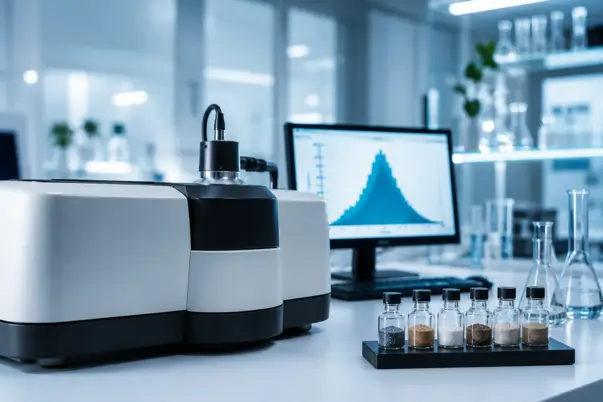
Laser diffraction is one of the most accurate and widely accepted techniques for measuring particle size. At SGM National Laboratory, we provide Laser Diffraction Particle Size Analysis in Mumbai using the advanced Malvern Mastersizer, capable of measuring particles from nanometres to millimetres with exceptional precision. Our Particle Size Testing Lab in Mumbai delivers fast, repeatable, and reliable particle size distribution data for powders, suspensions, and emulsions. The detailed reports support quality control, research, product development, and process optimization while helping manufacturers achieve consistent product quality and meet industry standards.
High Accuracy
Our advanced particle size analysis equipment delivers highly accurate and reliable measurements across a broad particle size range. Precise results help manufacturers improve product consistency, optimize production processes, meet quality standards, and make confident technical decisions.
Fast Analysis
Our laboratory performs particle size analysis quickly without compromising accuracy. Fast turnaround times help manufacturers, researchers, and quality control teams make timely production decisions, reduce delays, and keep projects and manufacturing schedules on track.
Repeatable Results
We use standardized testing procedures and advanced instrumentation to produce highly repeatable particle size measurements. Consistent results across multiple tests improve quality assurance, process validation, product development, and confidence in analytical data.
Wide Particle Size Range
Our testing capabilities cover particles from nanometres to millimetres, making the analysis suitable for powders, granules, suspensions, and emulsions. This wide measurement range supports diverse industrial applications and comprehensive material characterization.
Dry & Wet Testing
Our laboratory offers both dry and wet particle size analysis to accommodate different material types and testing requirements. This flexibility ensures accurate particle size measurements for free-flowing powders, liquid suspensions, emulsions, and other industrial samples.
ISO-Compliant Methodology
Our particle size testing follows internationally recognized ISO-compliant methodologies to ensure accurate, reliable, and reproducible results. Standardized procedures support regulatory compliance, product quality, laboratory consistency, and customer confidence.
Particle Characterization Lab in Mumbai
Particle characterization involves more than simply measuring particle size. At SGM National Laboratory, our Particle Characterization Lab in Mumbai provides comprehensive analysis to help manufacturers understand the physical properties and behaviour of their materials. Our Particle Analysis Lab Mumbai services support quality control, process optimization, product development, and regulatory compliance across various industries. We evaluate key material characteristics, including:
| Parameter | Why It Matters |
|---|---|
| Particle Size Distribution | Determines the size range and uniformity of particles for consistent product quality. |
| Particle Shape Analysis | Evaluates particle morphology, affecting flowability, packing, and product performance. |
| Specific Surface Area | Measures the total surface area of particles, influencing chemical reactions and material performance. |
| Bulk Density | Determines the packing density of powders for efficient storage, transport, and manufacturing. |
| Flowability Testing | Assesses how easily powders flow during processing, handling, and production operations. |
| Agglomeration Assessment | Identifies particle clumping that may impact product consistency, processing, and final quality. |
Industries We Work With

Processing Industries
Manufacturing and processing facilities use water testing to monitor process, boiler, cooling, and effluent water. Analysis helps maintain product quality, protect equipment, improve process efficiency, and support environmental and regulatory requirements.
Power Plants
Power plants and utility facilities test boiler, cooling, process, and discharge water to monitor quality and system performance. Testing supports corrosion and scaling control, operational efficiency, environmental monitoring, and applicable requirements.

Construction
Construction and infrastructure projects may require testing of on-site water and groundwater sources. Results help assess water suitability, identify relevant quality concerns, and support material performance, site planning, and project requirements.

Water Authorities
Municipal bodies and water authorities monitor drinking water, sewage, and treated wastewater to evaluate water quality. Testing provides useful data for public health protection, treatment assessment, environmental monitoring, and applicable compliance requirements.

Environmental Consulting
Environmental consultants use water testing data for site assessments, environmental audits, impact studies, monitoring programs, and reporting. Reliable analytical results help consultants evaluate water quality and support informed environmental management decisions.

Academic Institutions
Universities, research centres, and academic institutions require water analysis for experiments, studies, and research projects. Testing can be planned around specific parameters and objectives to provide precise data for scientific evaluation and documentation.

Agriculture
Agricultural businesses and irrigation professionals test water to evaluate its suitability for crop production and irrigation systems. Analysis helps assess relevant salts, chemical properties, and other parameters that may influence soil conditions and crop performance.
Healthcare Industries
Pharmaceutical and healthcare facilities may require water testing for specified quality parameters across relevant water sources and processes. Testing supports quality monitoring, process control, hygiene requirements, and reliable water management within operations.

Food Processing
Food and beverage manufacturers rely on water for processing, cleaning, production, and other operations. Water testing helps monitor relevant quality parameters, identify potential issues, maintain process consistency, and support applicable quality and safety requirements.

Why Clients Work With SGM National Laboratory
Standardized Testing — Testing follows recognized national and international standards for consistent and reliable results.
Accuracy & Repeatability — Calibrated instruments and controlled conditions support accurate, repeatable test results.
Modern Analytical Capability — Advanced laboratory equipment supports detailed physical, chemical, and microbiological testing.
National Reach — We serve clients across India through a structured sample submission and courier process.
Clear & Timely Reporting — Get easy-to-understand reports with relevant results, units, and testing details.
Frequently Asked Questions
Water analysis identifies impurities, harmful chemicals, and microbial risks before they cause health concerns, equipment damage, crop losses, or environmental issues. Regular testing provides reliable data for safer water use and better management.
A water testing laboratory can evaluate parameters such as pH, hardness, TDS, salinity, turbidity, colour, microbial content, heavy metals, nitrates, pesticides, and other chemical properties based on the water source and testing requirements.
Rajasthan's climate and groundwater conditions can contribute to higher levels of salts, minerals, fluoride, and hardness. Regular water testing helps households, farmers, and industries understand water quality and identify potential concerns early.
Water testing accuracy depends on suitable laboratory equipment, trained analysts, controlled testing conditions, and recognized testing procedures. Results are carefully reviewed before reporting to support consistent, reliable, and technically useful water quality data.
Industries such as food and beverage, pharmaceuticals, textiles, agriculture, healthcare, manufacturing, and power depend on water testing. Regular analysis helps maintain water quality, support production processes, protect equipment, and meet applicable requirements.
Irrigation water may contain excess salts, minerals, or other constituents that can affect crops and soil over time. Testing helps farmers understand water suitability, manage irrigation practices, and take appropriate steps to protect soil and crop performance.
Water testing frequency depends on its source, application, quality risks, and monitoring requirements. Drinking water, industrial water, and irrigation water may require periodic testing to identify changes and maintain suitable quality over time.
Without regular testing, contaminants, microbial risks, excessive salts, or unsuitable chemical properties may remain unnoticed. These issues can affect health, crops, production, equipment, and the environment before visible problems become apparent.
Water testing provides documented analytical results for relevant quality parameters. Clear test reports can help industries monitor water quality, maintain records, support audits, and evaluate their water against applicable project or regulatory requirements.
Yes. Water testing services are suitable for households, housing societies, small businesses, and industrial clients. Testing can cover drinking water, borewell water, tank water, irrigation water, and other samples based on the specific requirement.
Depending on the testing requirement, laboratories may use techniques such as ICP-MS, ion chromatography, UV-Vis spectrophotometry, and membrane filtration. These methods support detailed chemical, elemental, and microbiological water quality analysis.
Testing time depends on the number of parameters, sample type, analytical method, and testing complexity. Basic analyses may require less time, while detailed chemical and microbiological testing can require additional laboratory processing.
Groundwater in Rajasthan can contain elevated levels of fluoride, salts, hardness, and other minerals depending on local conditions. Regular testing helps identify water quality concerns and supports suitable treatment, usage, and management decisions.
Yes. Water analysis can test for specified heavy metals, chemicals, and other pollutants associated with industrial activities. Such testing helps identify potential contamination and provides analytical data for environmental assessments, monitoring, and investigation.
Water testing can be important for construction and infrastructure projects where water is used onsite or groundwater is involved. Analysis helps assess water characteristics that may affect materials, processes, equipment, and project-specific quality requirements.
The required tests depend on the water source and intended use, such as drinking, irrigation, industrial processing, or environmental monitoring. A suitable testing panel can be selected according to the sample and specific project requirements.