
Rubber Raw Material Testing Lab in India
A finished rubber product's strength, elasticity, and durability are set long before it's moulded — in the natural rubber, synthetic elastomers, fillers, and curing agents that go into it. SGM National Laboratory tests rubber raw materials and compounds for manufacturers, compounders, exporters, and importers across India, from our facility in Udaipur, Rajasthan, helping catch quality issues before they become a production problem.
Rubber Raw Material Testing Lab in India
A finished rubber product’s strength, elasticity, and durability are set long before it’s moulded, in the natural rubber, synthetic elastomers, fillers, and curing agents that go into it. SGM National Laboratory is a rubber raw material testing lab that tests rubber raw materials and compounds for manufacturers, compounders, exporters, and importers across India, from our facility in Udaipur, Rajasthan, helping catch quality issues before they become a production problem. With advanced testing methods and reliable analysis, we help ensure that every raw material meets the required quality and performance standards. Our goal is to support consistent production, improve product reliability.
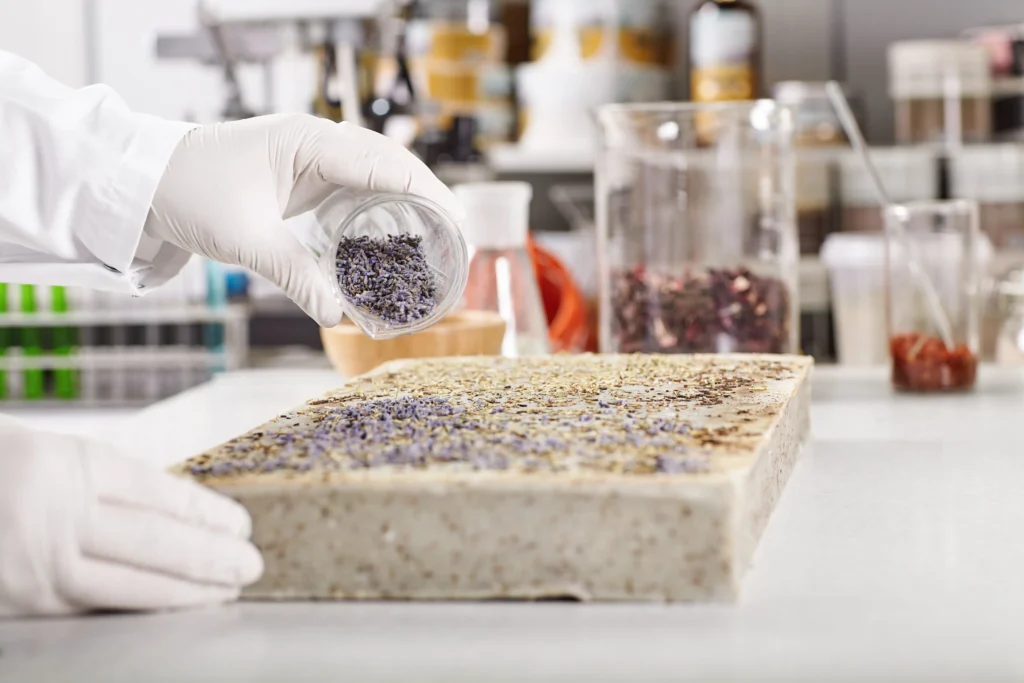
What We Test in Rubber Raw Materials
SGM National Laboratory offers comprehensive rubber raw material testing services in India for manufacturers, compounders, exporters, importers, and quality control teams. Our rubber raw material testing lab covers natural rubber, synthetic rubber, elastomers, fillers, carbon black, silica, processing oils, curing agents, and rubber compounds. We assess key physical, chemical, mechanical, and thermal properties using appropriate ASTM, ISO, and BIS standards. Our rubber testing helps verify raw material quality, compare suppliers, optimize formulations, maintain batch consistency, investigate material variations, and support product development. Detailed technical reports provide reliable test data for quality assurance, supplier qualification, production control, and informed manufacturing decisions.
Natural Rubber Testing
Our rubber testing laboratory evaluates natural rubber for plasticity, viscosity, ash content, dirt content, and volatile matter. Testing helps assess raw material quality, consistency, processing behaviour, and suitability for manufacturing applications.
Synthetic Rubber Testing
At our rubber testing lab, testing covers synthetic elastomers such as SBR, NBR, EPDM, and CR for consistency and relevant physical properties. Analysis supports material selection, formulation control, production optimization, and reliable finished-product performance.
Rubber Compound Testing
Our rubber raw material testing lab tests rubber compounds for hardness, tensile strength, elongation, density, curing behaviour, and abrasion resistance. These results help manufacturers monitor batch consistency, optimize formulations, and maintain the quality of products.
Physical Property Testing
Rubber lab testing of physical properties evaluates tensile strength, tear resistance, hardness, elongation, compression set, and resilience. These properties help determine rubber flexibility, durability, deformation resistance, and suitability for specific applications.
Chemical Analysis
Chemical analysis at our rubber testing laboratory evaluates fillers, carbon black, silica, curing agents, additives, ash, and other formulation components. Testing supports raw material verification, supplier qualification, formulation control, and quality assessment of rubber compounds.
Thermal Property Testing
Thermal testing at our rubber testing lab evaluates rubber behaviour under elevated temperatures and ageing conditions. Analysis helps assess heat resistance, thermal stability, and changes in material performance, supporting applications that require long-term durability.
Mooney Viscosity Testing
Mooney viscosity testing at our rubber raw material testing lab measures the flow and processing characteristics of uncured rubber. Results help manufacturers assess material consistency, control processing conditions, compare suppliers, and maintain uniform behaviour during rubber compound production.
Cure Characteristics Testing
Rubber lab testing of cure characteristics evaluates curing behaviour, including scorch time, cure time, and related characteristics. Analysis helps optimize vulcanization conditions, improve processing control, and achieve consistent physical properties in finished rubber products.
Abrasion & Wear Testing
Abrasion testing at our rubber testing laboratory measures a rubber material’s resistance to wear under specified conditions. Results help evaluate durability and service performance for products exposed to friction, rubbing, and repeated mechanical contact during use.
Advanced Rubber Raw Material Testing Lab in India
SGM National Laboratory runs an advanced rubber raw material testing lab in India using modern analytical instruments and standardized ASTM, ISO, and BIS testing methods. Our rubber testing laboratory evaluates the physical, mechanical, thermal, and chemical properties of natural rubber, synthetic rubber, elastomers, and rubber compounds with high accuracy. We deliver reliable and repeatable test results that support quality control, supplier qualification, product development, process optimization, and regulatory compliance. Our comprehensive reports help manufacturers select suitable raw materials, improve production consistency, reduce material failures, and ensure the long-term performance of finished rubber products.
Accurate Test Results
Our rubber testing lab uses calibrated instruments and validated test methods to deliver accurate results. Precise analysis helps manufacturers evaluate raw material quality, improve product consistency, reduce production defects, and maintain compliance with industry specifications.
Fast Turnaround Time
We provide quick and efficient rubber testing without compromising accuracy. Our fast reporting enables manufacturers and quality teams to make timely production decisions, minimize delays, and maintain uninterrupted manufacturing operations.
Comprehensive Material Analysis
Our rubber raw material testing lab covers natural rubber, synthetic rubber, rubber compounds, fillers, additives, processing oils, and curing agents. Comprehensive material evaluation helps manufacturers verify quality, compare suppliers, and optimize rubber formulations.
ASTM, ISO & BIS Standards
All rubber lab testing is performed according to recognized ASTM, ISO, and BIS standards. Standardized methodologies ensure reliable, reproducible, and internationally accepted test results for quality assurance, regulatory compliance, and consistent manufacturing process validation.
Advanced Testing Equipment
Our laboratory is equipped with modern testing instruments for evaluating mechanical, physical, thermal, and chemical properties of rubber materials. Advanced equipment ensures precise measurements and dependable analytical data for demanding applications.
Detailed Technical Reports
Our rubber raw material testing lab provides comprehensive reports with clear test results, observations, and technical interpretations. These reports support quality assurance, supplier approval, product validation, troubleshooting, and informed decision-making throughout manufacturing.
Common Testing Parameters
Rubber raw material testing involves more than checking basic quality parameters. At SGM National Laboratory, our rubber raw material testing lab in India provides detailed analysis of the physical, mechanical, thermal, and chemical properties of natural rubber, synthetic rubber, elastomers, fillers, and rubber compounds. Our testing helps manufacturers assess material consistency, verify specifications, compare suppliers, optimize formulations, and improve production processes. We evaluate key characteristics such as viscosity, hardness, tensile strength, elongation, density, ash content, moisture, abrasion resistance, curing behaviour, thermal stability, and chemical composition. These testing parameters support quality assurance, product development, supplier qualification, process control, troubleshooting, and regulatory requirements across diverse rubber manufacturing applications.
| Parameter | Why It Matters |
|---|---|
| Tensile Strength | Maximum stress rubber can withstand before breaking |
| Elongation at Break | Flexibility and stretchability under tensile load |
| Hardness (Shore A) | Balance between flexibility, strength, and performance |
| Specific Gravity | Material density for formulation and QC consistency |
| Ash Content | Inorganic residue, indicating purity or unwanted fillers |
| Heat Ageing Resistance | Ability to retain properties after prolonged heat exposure |
Industries We Serve in India

Tyre Manufacturing
Rubber testing of natural and synthetic rubber covers compound quality, hardness, tensile strength, abrasion resistance, and durability, helping tyre manufacturers maintain consistent performance across passenger, commercial, and off-road tyres.

Automotive Industry
Our rubber testing laboratory tests rubber used in seals, hoses, gaskets, mounts, and vibration-control components for hardness, tensile strength, heat resistance, flexibility, and durability under demanding automotive operating conditions.

Footwear Industry
Our rubber testing lab evaluates rubber materials for hardness, flexibility, tensile strength, elongation, and abrasion resistance to support durable, comfortable, and reliable soles for different footwear applications and production requirements.

Industrial Rubber Products
Rubber lab testing of materials used in belts, rollers, mats, seals, and engineered components covers physical, mechanical, and chemical properties, helping manufacturers maintain material consistency, durability, and product performance.

Construction Industry
Our rubber raw material testing lab tests rubber used in expansion joints, waterproofing systems, seals, gaskets, and vibration pads for strength, flexibility, weather resistance, ageing behaviour, and durability in construction environments.

Electrical & Electronics
Testing rubber compounds used in cable insulation, grommets, seals, and protective components for electrical, thermal, mechanical, and ageing properties, supporting reliable performance under continuous operating conditions.

Medical Devices
Our rubber raw material testing lab tests rubber materials used in seals, tubing, stoppers, and other healthcare components for physical and chemical properties, helping manufacturers verify material consistency, durability, and suitability for intended applications.

Consumer Goods
Testing rubber materials used in household and consumer products for hardness, flexibility, tensile strength, abrasion resistance, and durability, helping manufacturers maintain consistent quality and reliable product performance.

Aerospace & Defense
Our rubber testing lab evaluates high-performance rubber materials for tensile strength, hardness, elongation, heat resistance, ageing, and durability, supporting reliable performance of rubber components under demanding aerospace and defense conditions.
Why Manufacturers Choose Our Rubber Raw Material Testing Lab
- Testing scoped to your rubber type. Our rubber raw material testing lab covers natural, synthetic, and compounded rubber, with parameters selected to match your material and application.
- Reports built for formulation and quality decisions. Clear methodology, parameters, and results support supplier qualification, formulation development, quality control, and batch release decisions.
- Coverage across the rubber supply chain. Rubber lab testing covers natural and synthetic rubber, compounded materials, fillers, additives, and other raw materials to help maintain consistent quality and performance.
- Based in Udaipur, Rajasthan, serving India. SGM National Laboratory is a rubber raw material testing lab serving manufacturers, suppliers, and quality control teams across diverse industries.

Frequently Asked Questions
A rubber raw material testing lab evaluates properties such as plasticity, viscosity, hardness, tensile strength, elongation, ash, moisture, abrasion, and thermal stability to verify material quality, consistency, and suitability before production.
Natural rubber testing commonly focuses on plasticity, viscosity, ash, dirt, and volatile matter, while synthetic rubber testing evaluates grades such as SBR, NBR, EPDM, and CR for consistency, physical properties, and application requirements.
Curing behaviour determines how a rubber compound responds during vulcanization and moulding. Testing helps assess scorch time, cure time, and curing characteristics, reducing the risk of under-cured or over-cured parts and inconsistent product performance.
Batch-to-batch hardness variation can result from changes in raw rubber quality, filler loading, plasticizer levels, curing agents, or processing conditions. Hardness testing helps identify formulation changes and maintain consistent compound properties across production batches.
Yes, appropriate chemical and physical testing can help identify unexpected processing oils, additives, or contaminants that may alter rubber properties. Comparing test results with specifications can help trace formulation changes, contamination, or supplier-related inconsistencies.
Ash content testing measures the inorganic residue remaining after a rubber sample is heated under specified conditions. The result helps assess filler and mineral content and can indicate unexpected inorganic materials or contamination affecting raw material consistency.
Heat ageing resistance shows how well rubber retains properties such as tensile strength, elongation, and hardness after controlled heat exposure. This is important for tyres and automotive components that experience prolonged operating temperatures during service.
No. Tensile strength measures the maximum stress a rubber material withstands before breaking, while elongation at break measures how much it stretches before failure. Testing both provides a clearer understanding of rubber flexibility, strength, and durability.
Compression set testing evaluates how well rubber recovers its original thickness after being compressed for a specified period and condition. Lower compression set generally indicates better recovery, making the test useful for assessing gasket and sealing applications.
Imported rubber compounds should be tested against the required specification just like domestic materials. Testing helps verify the supplier's stated properties, identify variations between batches, and confirm that the material is suitable for your manufacturing process.
Specific gravity measures the density of a rubber compound and can change when filler, plasticizer, or other ingredient levels vary. Comparing specific gravity between batches helps detect formulation changes and supports consistent material quality during production.
Yes. Testing raw materials and failed rubber products can help identify potential causes such as incorrect formulation, poor curing, contamination, inadequate strength, or thermal degradation. Parameters such as hardness, tensile strength, elongation, and ageing are useful for investigation.
Required sample quantity depends on the rubber type, sample condition, number of parameters, and testing methods selected. Before sending a sample, share the material details and required tests so the laboratory can recommend suitable quantity and packaging.
Yes. Filler type, particle characteristics, loading level, and dispersion can significantly influence abrasion resistance and other compound properties. Testing abrasion resistance alongside hardness, tensile strength, and elongation helps evaluate the overall performance of the formulation.
Yes. Testing materials from a new supplier against your approved specification provides objective data for supplier evaluation. It helps compare material quality, verify key properties, identify differences from existing suppliers, and support informed purchasing and approval decisions.
Retesting frequency depends on material variability, supplier consistency, production volume, application requirements, and quality specifications. Critical applications may require more frequent checks, while established suppliers and stable materials may follow a defined periodic testing schedule.
Frequently Asked Questions
A rubber raw material testing lab evaluates properties such as plasticity, viscosity, hardness, tensile strength, elongation, ash, moisture, abrasion, and thermal stability to verify material quality, consistency, and suitability before production.
Yes. Our rubber testing laboratory accepts one-time samples as well as regular batch testing. Tell us the material and the tests you need, and we will advise on quantity and packaging.
Natural rubber testing commonly focuses on plasticity, viscosity, ash, dirt, and volatile matter, while synthetic rubber testing evaluates grades such as SBR, NBR, EPDM, and CR for consistency, physical properties, and application requirements.
Curing behaviour determines how a rubber compound responds during vulcanization and moulding. Rubber lab testing of curing helps assess scorch time, cure time, and curing characteristics, reducing the risk of under-cured or over-cured parts and inconsistent product performance.
Batch-to-batch hardness variation can result from changes in raw rubber quality, filler loading, plasticizer levels, curing agents, or processing conditions. Hardness testing at our rubber raw material testing lab helps identify formulation changes and maintain consistent compound properties across production batches.
Yes, appropriate chemical and physical testing can help identify unexpected processing oils, additives, or contaminants that may alter rubber properties. Comparing test results with specifications can help trace formulation changes, contamination, or supplier-related inconsistencies.
Ash content testing measures the inorganic residue remaining after a rubber sample is heated under specified conditions. The result helps assess filler and mineral content and can indicate unexpected inorganic materials or contamination affecting raw material consistency.
Heat ageing resistance shows how well rubber retains properties such as tensile strength, elongation, and hardness after controlled heat exposure. This is important for tyres and automotive components that experience prolonged operating temperatures during service.
No. Tensile strength measures the maximum stress a rubber material withstands before breaking, while elongation at break measures how much it stretches before failure. Testing both provides a clearer understanding of rubber flexibility, strength, and durability.
Compression set testing at our rubber raw material testing lab evaluates how well rubber recovers its original thickness after being compressed for a specified period and condition. Lower compression set generally indicates better recovery, making the test useful for assessing gasket and sealing applications.
Imported rubber compounds should be tested against the required specification just like domestic materials. Testing at a rubber raw material testing lab helps verify the supplier’s stated properties, identify variations between batches, and confirm that the material is suitable for your manufacturing process.
Specific gravity measures the density of a rubber compound and can change when filler, plasticizer, or other ingredient levels vary. Comparing specific gravity between batches helps detect formulation changes and supports consistent material quality during production.
Yes. Our rubber raw material testing lab can test raw materials and failed rubber products to help identify potential causes such as incorrect formulation, poor curing, contamination, inadequate strength, or thermal degradation. Hardness, tensile strength, elongation, and ageing are useful parameters for investigation.
Required sample quantity depends on the rubber type, sample condition, number of parameters, and testing methods selected. Before sending a sample to our rubber raw material testing lab, share the material details and required tests so we can recommend suitable quantity and packaging.
Yes. Filler type, particle characteristics, loading level, and dispersion can significantly influence abrasion resistance and other compound properties. Testing abrasion resistance alongside hardness, tensile strength, and elongation helps evaluate the overall performance of the formulation.
Yes. Testing materials from a new supplier against your approved specification provides objective data for supplier evaluation. It helps compare material quality, verify key properties, identify differences from existing suppliers, and support informed purchasing and approval decisions.