
SGM National Laboratory

SGM National Lab

Chemical Testing Lab in India

Chemical testing tells you what's actually in a material — not what the specification sheet says should be in it. SGM National Laboratory analyzes minerals, ores, chemicals, fertilizers, cement raw materials, ceramics, glass raw materials, paints, plastics, and rubber for composition, purity, and the specific parameters that determine whether a batch is fit for use. We work with manufacturers, suppliers, buyers, and quality-control teams across India from our lab in Udaipur, Rajasthan.


Chemical Testing Laboratory in India

Chemical testing is an important part of quality assurance, research, manufacturing, and material evaluation. It helps determine what a material contains, how much of each component is present, and whether the sample meets the required specifications.

At SGM National Laboratory, our Chemical Testing Laboratory in India performs analytical testing for a wide range of materials and industries. Depending on the sample and testing objective, analysis may include elemental composition, major and minor constituents, trace elements, impurities, moisture, ash, chemical properties, and other relevant parameters.

Particle Size Testing Lab in Mumbai

What Our Chemical Testing Services in India

SGM National Laboratory offers a broad range of Chemical Testing Services in India for industrial, commercial, agricultural, mineral, environmental, and research applications.

chemical analysis

Chemical Composition Testing

We identify and measure the chemical constituents of minerals, ores, ceramics, cement materials, and industrial raw materials. Testing helps verify material composition, compare results with specifications, and support reliable quality-control decisions.

Elemental Composition Analysis

Elemental Analysis

Elemental Analysis measures the concentration of specific elements required for your material or application. Testing helps manufacturers and processors verify key elements, monitor quality, identify variations, and ensure materials meet defined specifications.

Mineral Chemical

Mineral Chemical Analysis

Mineral and Ore Chemical Analysis evaluates composition, grade, impurity levels, and relevant oxides or elements. Results support mineral characterization, processing decisions, quality assessment, and reliable evaluation of material value and suitability.

Industrial Raw Material

Industrial Raw Material

Trace element analysis detects and measures elements present at very low concentrations. It helps identify contamination, monitor material quality, evaluate environmental factors, and characterize minerals, chemicals, metals, and other industrial materials accurately.

Material Purity Testing

Material Purity Testing determines the concentration of the desired component and identifies other substances present in the sample. It helps manufacturers and suppliers verify product quality, assess material consistency, and identify factors affecting processing.

Impurity Level Analysis

Impurity Level Analysis identifies and quantifies unwanted constituents that may affect material processing, product quality, or performance. Testing helps industries detect contamination, verify specification limits, and maintain consistent raw-material quality.

Moisture Content Testing

Moisture Content Testing

Moisture Content Testing measures the amount of water present in powders, minerals, chemicals, fertilizers, and soils. Results help evaluate storage, handling, transport weight, processing behaviour, and batch consistency for different industrial applications.

Loss Ignition Testing

Loss Ignition Testing

Loss on Ignition testing measures mass loss when a sample is heated under controlled conditions. It helps assess volatile content, moisture, organic matter, and other components in minerals, ores, ceramics, cement materials, and related products for quality control.

pH Trace Analysis

pH Analysis measures the acidity or alkalinity of liquid samples and prepared solutions. Testing supports chemical, agricultural, environmental, and industrial applications by helping assess material quality, process conditions, and suitability for specific requirements.
Chemical Analysis Methods

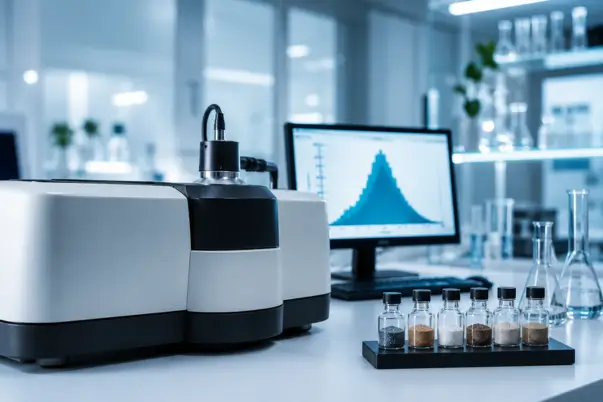
Chemical Analysis Methods involve selecting suitable analytical techniques based on the material, chemical composition, target parameters, and testing requirements. Depending on the sample, methods such as XRF, wet chemical analysis, gravimetric, volumetric, instrumental, and spectroscopic analysis may be used for accurate material characterization and quality assessment.

X-Ray Fluorescence

XRF testing determines elemental and oxide composition in inorganic materials such as minerals, ores, ceramics, glass raw materials, and cement samples. It provides reliable composition data for quality control and material assessment.

Wet Chemical Analysis

Wet Chemical Analysis uses controlled chemical reactions, separation, and measurement procedures to determine specific constituents. It is suitable when traditional laboratory methods provide accurate results for the required parameter.

Gravimetric Analysis

Gravimetric Analysis determines a constituent by isolating it through an appropriate analytical procedure and measuring its mass. This method provides accurate quantitative results for materials where mass-based determination is suitable.

Volumetric Analysis

Volumetric or Titrimetric Analysis determines constituent concentration through a controlled chemical reaction and precise measurement of reagent volume. It provides reliable quantitative results for a wide range of chemical and industrial materials.

Instrumental Analysis

Instrumental Analysis uses specialized laboratory instruments to obtain detailed elemental or chemical information. The appropriate technique is selected according to the material, testing parameter, required sensitivity, and accuracy of the analysis for reliable results.

Spectroscopic Analysis

Spectroscopic Analysis studies how materials interact with electromagnetic radiation to identify or assess their chemical and elemental composition. It supports material identification, characterization, and composition analysis across various sample types.

Chemical Testing Parameters

The parameters tested by a Chemical Testing Lab in India vary according to the material, industry, and testing objective. Common parameters may include chemical composition, elemental analysis, purity, impurities, moisture, loss on ignition (LOI), pH, trace elements, heavy metals, and product-specific characteristics required for quality control and material evaluation. Testing parameters can be customized based on customer specifications, industry requirements, and intended material applications

Parameter Typically Tested In
SiO₂ Minerals, silica, ceramics, glass materials
Al₂O₃ Minerals, ceramics, refractory materials
Fe₂O₃ / Iron Ores, minerals, ceramics, industrial materials
CaO Limestone, cement materials, minerals
MgO Dolomite, minerals, refractory materials
Na₂O Ceramics, glass, minerals
K₂O Minerals, ceramics, glass materials
TiO₂ Minerals, pigments, industrial materials
Moisture Minerals, powders, chemicals, fertilizers
Loss on Ignition Minerals, ores, ceramics, cement materials
pH Liquid and prepared samples
Trace Elements Minerals, ores, industrial materials
Heavy Metals Industrial and environmental samples
Purity Chemicals and raw materials

Industries We Serve India

Chemical Industry

Chemical Industry

Chemical testing evaluates composition, purity, impurities, and key chemical properties of raw materials and products. It helps manufacturers verify specifications, maintain formulation accuracy, and support consistent quality control throughout production.

Paint & Coatings

Paint & Coatings

Testing of pigments, fillers, extenders, and raw materials helps evaluate composition, purity, particle characteristics, and consistency. The results support formulation development, quality control, and reliable performance of paints and coating products.

Fertilizer Industry

Chemical and nutrient testing evaluates fertilizer composition, nutrient content, impurities, moisture, and other relevant parameters. Testing helps manufacturers verify product quality, maintain consistency, and assess materials against applicable specifications.

Agriculture

Agriculture

Testing of soil, fertilizers, and agricultural materials evaluates relevant chemical properties such as nutrients, pH, moisture, and composition. Results help support material assessment, quality control, and informed agricultural management decisions.

Glass Manufacturing

Glass Manufacturing

Glass raw-material testing evaluates oxide composition, purity, and other relevant chemical parameters. Analysis helps manufacturers control formulations, identify material variations, maintain batch consistency, and support reliable quality in glass production.

Metallurgy & Steel

Metallurgy & Steel

Chemical testing of ores, minerals, alloys, and industrial additives helps determine composition, grade, impurities, and relevant elements. Results support process control, raw-material evaluation, quality assurance, and informed metallurgical decisions for better production planning and quality control.

Ceramics

Ceramics

Ceramic raw-material testing evaluates chemical composition, oxides, purity, and other relevant parameters. Analysis helps manufacturers control formulations, identify variations in raw materials, and maintain consistent processing and finished-product quality.

Mining & Minerals

Mining & Minerals

Testing of minerals and ores determines chemical composition, grade, purity, and impurity levels. Reliable analysis supports material classification, grading, processing decisions, quality control, and evaluation of mineral suitability for applications across various industries and end uses.

Cement & Construction

Chemical characterization of cement raw materials, minerals, and additives evaluates composition, oxides, impurities, and properties. Testing helps manufacturers maintain formulation control, verify material suitability, and support consistent construction-material quality.

Raw Material Testing Servers We Also Offer

Paint Raw Material Testing

Testing of paint raw materials Testing to evaluate chemical composition, physical properties, quality, consistency, and suitability for different coating and formulation requirements.

Plastic Raw Material Testing

Reliable testing of plastic raw materials Testing  to assess chemical composition, physical properties, consistency, quality, and suitability for various plastic manufacturing applications.

Rubber Raw Material Testing

Accurate testing of rubber raw materials Testing to evaluate chemical composition, physical properties, quality, consistency, and suitability for different rubber manufacturing applications.

Ceramics

Ceramic Raw Material Testing

Detailed testing of ceramic raw materials Testing to assess chemical composition, physical properties, mineralogical characteristics, thermal behaviour, quality, & suitability for ceramic applications.

Why Choose SGM National Laboratory in Mumbai?

  • A method suited to the material, not a one-size-fits-all test panel — we choose XRF, wet chemical, gravimetric, volumetric, or spectroscopic analysis based on what your sample and parameter actually need.
  • Reports that state the parameter, method, and result clearly, so they’re usable directly in your quality documentation or shared with a supplier or customer.
  • Testing scoped to your specification, not a generic checklist — tell us your material, industry, and what you’re checking against, and we build the panel around that.
  • Based in Udaipur, Rajasthan, working with clients across India — samples don’t need to originate locally.
Why Choose SGM National Laboratory ?

Frequently Asked Questions

A chemical testing lab analyzes minerals, ores, chemicals, fertilizers, and industrial raw materials to determine composition, purity, impurities, moisture, and other properties. Results support quality control, supplier evaluation, and product development.

We can test minerals, ores, cement materials, ceramics, glass raw materials, fertilizers, chemicals, pigments, fillers, plastics, rubber, soil, water, and other industrial samples based on the required testing parameters.

Common parameters include SiO₂, Al₂O₃, Fe₂O₃, CaO, MgO, Na₂O, K₂O, TiO₂, moisture, loss on ignition, pH, purity, trace elements, and selected impurities, depending on the sample and testing requirement.

Chemical composition testing shows what is actually present in a material batch. It supports supplier evaluation, batch comparison, quality control, and early identification of composition changes that may affect production or finished-product quality.

Yes. Testing can be customized according to your material type, specification, application, and testing objective. The required parameters can be selected based on what you need to evaluate rather than using the same fixed testing panel for every sample.


X-Ray Fluorescence (XRF) is an instrumental technique used to determine elemental or oxide composition in inorganic materials. It is commonly applied to minerals, ores, cement materials, ceramics, glass raw materials, and similar samples.


Yes. Minerals and ores can be analyzed for major, minor, and selected trace constituents such as silica, alumina, iron, calcium, magnesium, sodium, potassium, titanium, moisture, and loss on ignition, based on the required scope.

Chemical testing provides reliable data for evaluating incoming raw materials, comparing batches and suppliers, monitoring composition, and identifying variations. This helps manufacturers maintain consistency and address potential quality issues before they affect production.

Yes. Fertilizer samples can be tested for chemical and nutrient-related parameters according to the fertilizer type and your specific testing requirement. The testing scope can be selected to evaluate relevant composition, quality, and impurity parameters.

Turnaround time depends on the sample type, number of parameters, preparation requirements, and analytical method involved. Once we understand your testing requirements, our team can provide an expected timeline for the requested analysis.

Yes. Chemical testing supports formulation studies, raw-material characterization, product comparison, troubleshooting, and evaluation of manufacturing changes. Reliable analytical data can help R&D teams understand material composition and make informed development decisions.

Provide the material name, brief description, intended application, and required parameters if known. An existing specification, test requirement, or previous report can also help our team understand the testing scope more accurately.

A chemical testing report generally includes sample identification, the parameters tested, analytical results with applicable units, and the relevant analytical method or procedure where applicable. The report provides clear information for quality and technical evaluation.


Choose a laboratory with suitable analytical capabilities for your material and required parameters. Consider testing scope, methods, reporting clarity, technical expertise, and customization. Contact our team to discuss your requirement and determine the appropriate testing approach.